newcarloans.com.auwhat a car loan costs

00 The cost gauge

What a new car loan costs, read one gauge at a time

The price on the windscreen is one number. The loan behind it has several more: the interest rate, the fees, who arranged it, what is left owing at the end, and what it costs to leave early. This guide reads each of them from ASIC, its Moneysmart service, the ATO and the law.

A guide published by Dotto. General information, not financial advice: it does not arrange loans or give financial advice, and it names no lender, dealer or broker and quotes no market interest rate.

A speedometer-style gauge with six numbered bands around its rim, its needle resting at the start, and an odometer reading zero123456000000
On this page the needle rests at the start. Each guide moves it to its own band.

The six gauges

Moneysmart names three things to compare on any car loan: its features, its fees and its interest rate. The six guides below take those apart, one band of the dial each.

  1. Dealer finance or a loan arranged yourself

    Who is in the chain between the car and the lender, and what each of them charges.

  2. Balloon payments

    Why a smaller repayment can mean a larger total, worked through with round numbers.

  3. Novated leases

    A car lease run through the pay packet: the tax, the residual and the fine print, from the ATO.

  4. Secured or unsecured

    What stands behind the loan, and what the lender can do if repayments stop.

  5. The comparison rate on a car loan

    What happens to the rate when the fees go back in, on a small loan and a larger one.

  6. Paying a car loan off early

    The right to pay out, the payout figure, and the fees that can come with it.

The cost on the dashboard, and the cost off it
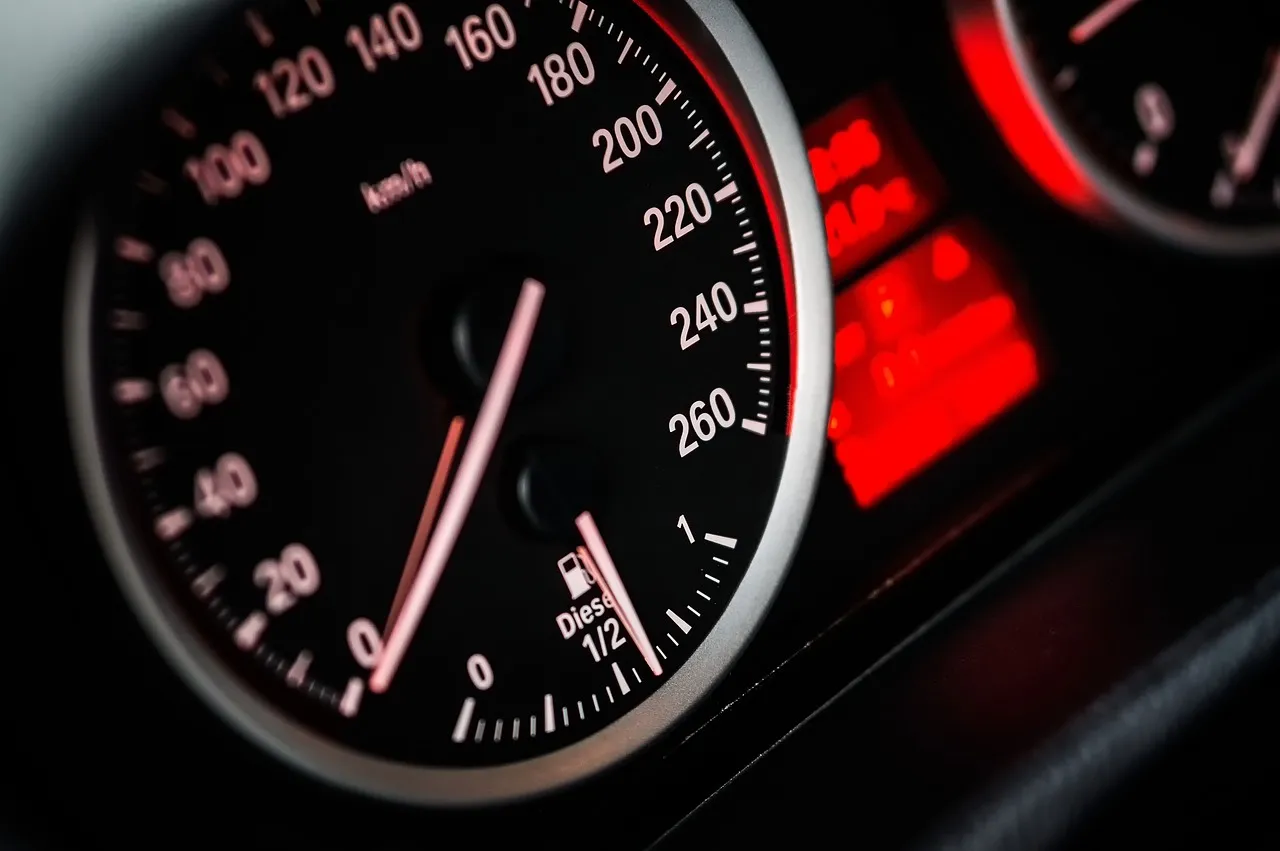
Close-up of a car speedometer marked in km/h, its numerals running up to 260, with red dashboard lights glowing beside it.
A speedometer reads one thing at a time; a car loan has several. Photo by qimono on Pixabay

Moneysmart’s advice is to look at loans before choosing the car, and to work out exactly how much can be spent with the other costs of buying and running a car counted in. It divides those costs into purchase costs and ongoing costs.

Its own worked example makes the point. A $15,000 car loan over four years at 11% cost $3,609 in interest; with stamp duty, registration, comprehensive insurance, petrol and servicing added, the total came to nearly $10,000 a year for four years, over $800 a month. (This guide re-ran the loan part: equal monthly repayments of $387.68 over 48 months come to about $3,609 in interest, which matches Moneysmart’s figure. )

What ASIC found when it lifted the bonnet

Over 350,000 loans from eight car finance providers sit behind the review of car lending that ASIC published in June 2026. It found wide variation in what car loans cost overall, and total fees that could be significant, especially on loans of relatively low value.

Loans usually carried two establishment fees: the lender’s own, between $299 and $995, and a distributor establishment fee, “ranging from a flat fee of $912 to up to $2,500”. The report adds that these costs are often capitalised, meaning added to the amount borrowed.

A distributor is the dealer or broker who sells the lender’s loan. The first guide follows the fee chain from the showroom to the lender, and the fifth shows what two fees do to a comparison rate.

From ASIC’s review

One customer paid over $9,000 in fees on a $49,162 car loan, about 18% of the total loan amount: more than $7,800 went to the lender and $1,320 to the broker. ASIC described that lender as charging the highest total fees across all the loans it reviewed.

How this guide reads the gauges

Sources for this page